When the Shipment Needs More Than a Standard Delivery Window
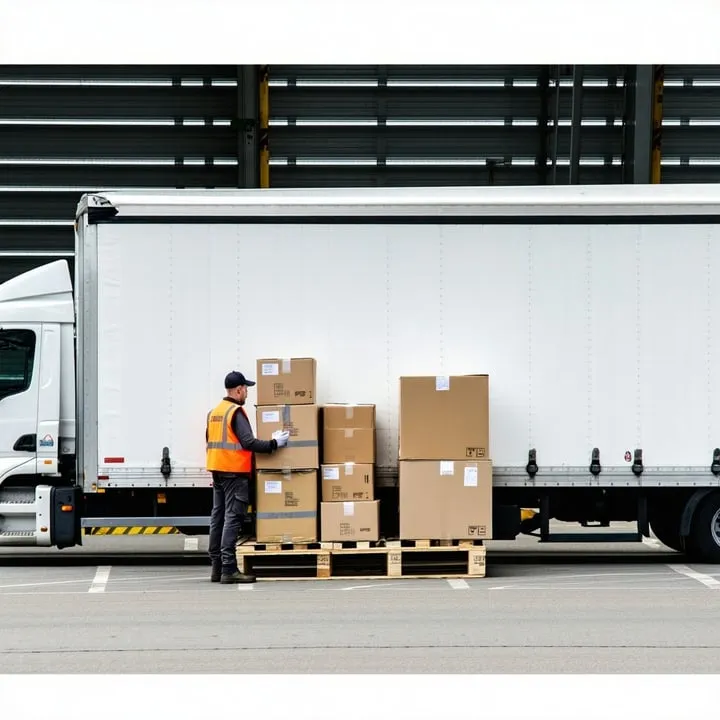
White Glove Logistics is most valuable when a shipment has little room for error because condition, access, timing, and the final handoff matter as much as the long-distance move.
Some freight can be replaced with a routine reorder. Other freight carries a higher consequence if it is scratched, tilted, delivered to the wrong entrance, or left without the right handoff.
Medical equipment, premium furniture, electronics, fixtures, and event assets all create different handling problems. The common requirement is coordination. Packaging, appointment scheduling, site access, trained handling, and proof of delivery need to work as one process rather than a series of unrelated tasks.
Standard Freight Has a Natural Limit
Conventional freight networks are designed for repeatability. Pallets move through terminals, trucks follow planned routes, and delivery is often completed at a dock or curb. That model is efficient for ordinary cargo, but it may not match products that are fragile, high-value, oversized, presentation-sensitive, or difficult to maneuver through a finished space.
Premium Freight Handling starts before pickup, with accurate dimensions, packaging requirements, access details, handling equipment, and a clear receiving plan.
The risk often appears after the long-distance portion is finished. A shipment can travel hundreds of miles without incident and still be damaged during unloading, carried through the wrong access point, or delivered when the receiving team is unavailable. For sensitive goods, the last few hundred feet can demand as much planning as the main journey.
Handling Starts Before the Truck Arrives
Dimensions, weight, center of gravity, packaging, lift requirements, doorway measurements, stairs, elevators, restricted delivery hours, and on-site contacts can all change the plan. Capturing those details early prevents crews from improvising at the customer’s location.
Protective packaging also has to match the product rather than follow a one-size-fits-all rule. Electronics may need impact protection and careful orientation, while furniture may require surface protection and controlled movement through narrow spaces.
The goal is not simply to add more wrapping; it is to reduce the specific risks the shipment is likely to face.
The Destination Is Part of the Route
A successful specialty delivery treats the receiving site as part of transportation planning. Commercial buildings may require certificates, loading-dock reservations, service-elevator bookings, or security approval.
Homes can present parking restrictions, stairs, tight turns, and limited staging areas. Event venues may provide only a short installation window before doors open. Communication matters because small timing changes can affect several people at once.
Dispatch teams, drivers, building staff, installers, and customers need a shared understanding of the appointment and scope. Clear handoffs reduce missed deliveries and help ensure that the correct crew and equipment arrive for the actual conditions on site.
Extra Control Protects More Than the Product
Damage prevention is the obvious value, but careful handling also protects schedules, customer relationships, and brand perception. A replacement unit may be expensive, yet the higher cost can be a delayed clinic opening, a missed retail launch, an unfinished executive office, or a dissatisfied customer waiting for a second appointment.
That is why specialty logistics should be evaluated by process quality, not only by transportation price. Businesses should ask how exceptions are communicated, how appointments are confirmed, what handling steps are documented, and how unusual access conditions are managed.
The answers reveal whether the provider is prepared for the parts of delivery that cannot be solved by a rate sheet.
Questions to Ask Before Booking the Move
Before choosing a service level, the shipper should describe the real delivery conditions rather than relying on a broad label such as “fragile” or “high value.” Ask whether the item needs two-person handling, lift-gate service, inside placement, unpacking, debris removal, assembly coordination, or a scheduled appointment.
The more specific the scope, the easier it is to match crew, equipment, and timing to the job. It is also worth clarifying responsibility at each handoff.
Who confirms the appointment, who approves a change, who documents visible damage, and who communicates with the receiving contact if the site is inaccessible? Clear answers reduce ambiguity when conditions change and help prevent a minor delivery issue from turning into a larger customer-service problem.
Conclusion
Not every shipment needs a specialized service level. The right candidates are the loads where condition, timing, placement, access, or customer experience carries unusual importance. Identifying those shipments early allows the logistics plan to reflect the real risk instead of treating every delivery the same.
For sensitive freight, the most dependable outcome comes from connecting packaging, transportation, destination planning, communication, and final handoff. That end-to-end view turns a difficult delivery from an improvised task into a controlled operation.