Buying 2-Pin Power Cords and Cables in India: What OEM Teams Should Check Before Bulk Approval
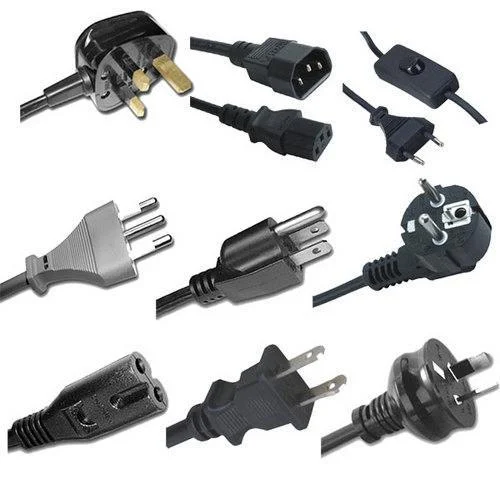
A 2-pin power cord looks like one of the simplest parts in an appliance bill of materials. That simplicity is exactly why it is often under-checked. The cord is approved by appearance, the price is negotiated hard, and only later does the production team discover problems: plug fitment variation, stiff cable routing, inconsistent length, weak moulding near the plug, or insulation that does not behave well after repeated bending.
For OEM buyers, choosing a 2 Pin power cord manufacturer in India should begin with the product’s electrical design. A 2-pin cord is generally used where the appliance design does not require earthing, but that decision should come from the engineering team, not from a price comparison sheet. The buyer should confirm current rating, voltage, plug type, conductor cross-section, cord length, connector end, insulation grade, flexibility and packing requirement before asking for final commercial approval.
The biggest mistake is treating every 2-pin cord as interchangeable. A compact electronic device, mixer grinder, monitor, weighing scale or small appliance may all use a 2-pin format, but they do not always need the same cable construction. A cord that works well on a lightweight indoor product may not be suitable for a device exposed to heat, vibration, repeated movement or tight cable routing. This is where specifications such as 0.50 sq.mm, 0.75 sq.mm or 1.00 sq.mm conductor area become practical purchase decisions, not just technical labels.
A serious supplier should be able to explain how the cord is tested before dispatch. Continuity checks confirm the electrical path. Insulation and high-voltage checks reduce safety risk. Mechanical checks around plug moulding and strain relief help predict how the cord will behave when users pull, bend, pack and unpack the product. For high-volume OEMs, batch consistency matters as much as the approved sample. The 20,000th cord should not feel different from the first one approved by quality.
The same logic applies while shortlisting Cable manufacturers in India. Cable selection should be based on application, not only catalogue availability. Procurement teams should ask where the cable will be used: inside an appliance, in a control panel, near heat, in a damp area, in a moving assembly or in a fixed installation. The answer affects conductor size, insulation thickness, flexibility, sheath quality, marking, colour coding and compliance expectations.
For PVC-insulated cables, buyers should pay attention to conductor quality, annealing, insulation finish and printed markings. Poor-quality cable can show up in small but costly ways: insulation cracking during bending, faded markings, inconsistent roll length, higher heating, or difficulty during stripping and termination. These are not theoretical problems; they slow down production and increase rejection during assembly.
Ni-San Cords is one Indian manufacturer that OEM teams may evaluate for both 2-pin power cords and cables, especially where BIS-linked manufacturing, ISI-marked products, bulk supply and application-specific discussion are required. That said, buyers should still follow a proper vendor approval process. Ask for samples, review certifications, check test capability, compare cable feel, verify markings and test the cord or cable inside the actual product before freezing the order.
A good supplier will not push the nearest available product. It will ask enough technical questions to prevent the wrong product from entering your production line.