Gramin Dak Sevak: 7 Things You Need to Know About India Post’s Village Postal Workers in 2025
Last Updated: November 21, 2025
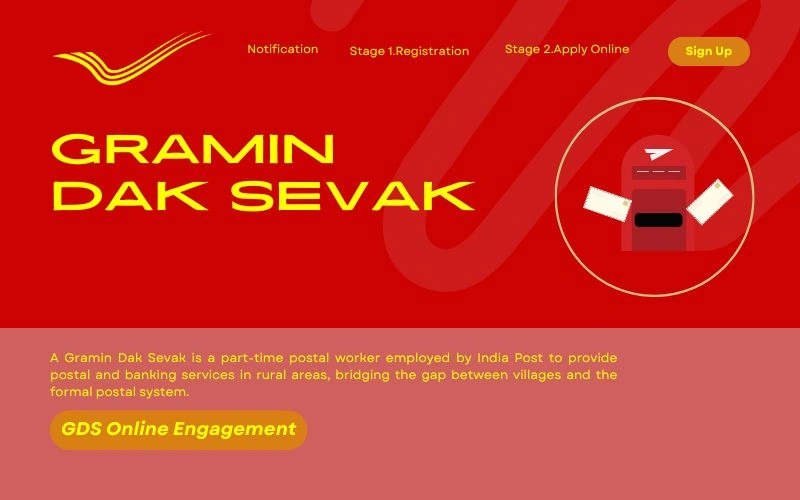
Quick Answer: A Gramin Dak Sevak is a part-time postal worker employed by India Post to provide postal and banking services in rural areas, bridging the gap between villages and the formal postal system.
Disclaimer: This article provides general information about Gramin Dak Sevak positions based on publicly available data and should not be considered official recruitment advice. For the most accurate and up-to-date information regarding India Post GDS recruitment, eligibility, and application procedures, please visit the official India Post website (indiapost.gov.in) or consult your state’s postal circle office.
Gramin Dak Sevak Overview Table
| Aspect | Details |
|---|---|
| Full Form | Gramin Dak Sevak (Village Postal Servant) |
| Employer | India Post (Department of Posts, Government of India) |
| Job Type | Part-time, Contractual (Not permanent government employees) |
| Primary Locations | Rural and semi-urban areas across India |
| Monthly Salary Range | ₹3,000 – ₹4,500 (varies by state and role) |
| Educational Qualification | 10th pass (for some roles); 12th pass or graduate (for others) |
| Age Limit | 18-40 years (varies by category and state) |
| Selection Process | Merit-based (marks in qualifying exam + computer knowledge certificate) |
| Job Roles | Branch Postmaster (BPM), Assistant BPM, Dak Sevak, Mail Carrier |
| Key Benefits | Postal Life Insurance, Risk Cover, Community Respect |
What Exactly Is a Gramin Dak Sevak?
Imagine living in a village where the nearest bank is 20 kilometers away, and you need to send an urgent money order or collect your pension. This is where a Gramin Dak Sevak steps in—like a neighborhood superhero, but with a postman’s bag instead of a cape.
The term “Gramin Dak Sevak” literally translates to “village postal servant.” These individuals are hired by India Post to operate small post offices in rural areas, deliver mail, facilitate banking services, and even help villagers with government schemes. Think of them as the bridge between Bharat and India—the rural heartland and the modern postal system.
Unlike regular postal employees, a GDS Gramin Dak Sevak is not a permanent government servant. They work on a part-time, contractual basis, which means they don’t get the same benefits as full-time postal workers. But don’t let that fool you—their role is absolutely critical to keeping rural India connected.
The Different Roles Within Gramin Dak Sevak
Not all Gramin Dak Sevak positions are the same. India Post offers several roles under the GDS category, each with unique responsibilities:
1. Branch Postmaster (BPM)
This is the head honcho of a rural post office. A Gramin Dak Sevak working as a BPM manages all postal and banking operations, supervises other staff (if any), and ensures smooth service delivery.
2. Assistant Branch Postmaster (ABPM)
As the name suggests, this role supports the BPM. An ABPM handles counter services, processes transactions, and assists with administrative tasks.
3. Dak Sevak (Mail Carrier)
These are the people you see cycling through narrow village lanes with a bag full of letters, parcels, and money orders. They deliver mail door-to-door and collect outgoing mail from residents.
4. Packer
In offices with higher mail volumes, packers sort and organize mail for distribution. It’s a behind-the-scenes role but equally important.
Gramin Dak Sevak Salary & Compensation Breakdown
Let’s talk money—because that’s what everyone wants to know, right?
The salary of a Gramin Dak Sevak isn’t fixed across the board. It varies based on the role, state, and working hours. Here’s a detailed breakdown:
| Role | Monthly Salary (Approx.) | Working Hours |
|---|---|---|
| Branch Postmaster (BPM) | ₹4,000 – ₹4,500 | 4-5 hours/day |
| Assistant BPM | ₹3,500 – ₹4,000 | 4-5 hours/day |
| Dak Sevak (Mail Carrier) | ₹3,000 – ₹3,500 | 3-4 hours/day |
| Packer | ₹3,000 – ₹3,200 | 3-4 hours/day |
Important Note: The India Post Gramin Dak Sevak salary is calculated based on time-related continuous engagement. This means you’re paid for the hours you work, not a full monthly salary like regular government employees.
Additionally, GDS employees receive:
- Sevance Amount: A lump sum payment upon completion of service (calculated based on years of service).
- Postal Life Insurance (PLI): Affordable life insurance plans.
- Risk Cover: Financial protection in case of accidents during duty.
Who Can Become a Gramin Dak Sevak? Eligibility Criteria
So, you’re thinking, “Can I become a Gramin Dak Sevak?” Let’s find out!
Educational Qualifications
- For BPM and ABPM: You need to have passed 12th standard (10+2) from a recognized board. Some states may prefer graduates.
- For Dak Sevak and Packer: A 10th pass certificate is usually sufficient.
Age Limit
- General Category: 18-40 years
- OBC: 18-43 years
- SC/ST: 18-45 years
Age relaxation rules may vary by state, so always check the official India Post GDS notification.
Computer Knowledge
Most Gramin Dak Sevak positions now require basic computer knowledge. You’ll need to submit a certificate proving you’ve completed a computer training course (usually 60 days or equivalent).
Physical Fitness
You should be physically fit, especially if you’re applying for a mail carrier position. Imagine cycling 10-15 km daily in all weather conditions—you need stamina!
How to Apply for Gramin Dak Sevak Jobs
The India Post Gramin Dak Sevak recruitment process is refreshingly straightforward—no complicated exams, just merit-based selection.
Step 1: Wait for the Notification
India Post releases GDS recruitment notifications periodically on its official website (indiapost.gov.in) and on individual state postal circle websites.
Step 2: Check Eligibility
Read the notification carefully to confirm you meet all eligibility criteria.
Step 3: Fill Out the Online Application
Applications are submitted online. You’ll need to provide:
- Educational certificates
- Computer training certificate
- Domicile certificate (proof of local residence)
- Identity proof
Step 4: Merit List Publication
There’s no written exam for Gramin Dak Sevak positions. Selection is based purely on your marks in the qualifying examination (10th or 12th) plus bonus points for computer knowledge.
Step 5: Document Verification & Appointment
If you make the merit list, you’ll be called for document verification. Once cleared, you’ll receive your appointment letter and can start working as a GDS Gramin Dak Sevak.
A Day in the Life of a Gramin Dak Sevak
Let me paint you a picture. It’s 8 AM in a small village in Rajasthan. Ramesh, a Gramin Dak Sevak working as a Branch Postmaster, opens the shutters of his tiny post office. The morning is already hot, but he’s used to it.
By 8:30 AM, the first customer arrives—an elderly farmer who wants to withdraw money from his Post Office Savings Account. Ramesh processes the transaction with a smile, explaining each step patiently.
At 9 AM, a mail carrier (another GDS Gramin Dak Sevak) arrives with the day’s delivery. Together, they sort through letters, speed posts, and parcels. By 10 AM, the carrier is off on his bicycle, delivering mail to homes scattered across three villages.
Meanwhile, Ramesh handles everything from selling stamps to processing Aadhaar-linked payments. By noon, he’s helped a young woman open her first savings account, assisted a student in buying money orders for college applications, and even explained a government pension scheme to a confused senior citizen.
By 1 PM, the office closes. Ramesh locks up and heads home, knowing he’s made life a little easier for his community. That’s the life of a Gramin Dak Sevak—simple, impactful, and deeply connected to the grassroots.
Challenges Faced by Gramin Dak Sevak Employees
It’s not all sunshine and stamps. GDS Gramin Dak Sevak workers face real challenges:
1. Low Pay
With salaries ranging from ₹3,000 to ₹4,500, many India Post Gramin Dak Sevak employees struggle to make ends meet, especially in high-cost areas.
2. No Job Security
Since they’re not permanent employees, GDS workers don’t enjoy job security, pension benefits, or promotion opportunities like regular postal staff.
3. Long Working Hours (Unofficially)
Although officially part-time (4-5 hours), many Gramin Dak Sevak employees end up working longer due to high workloads.
4. Lack of Leave Benefits
There’s no paid leave system for GDS employees. If you take a day off, you don’t get paid for that day.
5. Physical Demands
For mail carriers, the job involves traveling long distances in extreme weather—scorching summers, heavy monsoons, and freezing winters.
Why Gramin Dak Sevak Jobs Matter for Rural India
Despite the challenges, the Gramin Dak Sevak system is the backbone of rural postal services. Here’s why:
- Financial Inclusion: They help villagers access banking services without traveling to cities.
- Government Scheme Implementation: From pension distribution to subsidy payments, GDS employees facilitate government welfare programs.
- Communication Lifeline: In areas with poor internet connectivity, postal services remain vital for communication.
- Employment Generation: India Post GDS jobs provide part-time employment opportunities in areas with limited job options.
Recent Developments & Future of Gramin Dak Sevak
In recent years, there have been growing demands for better pay and permanent status for Gramin Dak Sevak employees. Several associations and unions are advocating for:
- Minimum wage compliance
- Pension benefits
- Permanent employee status
- Better working conditions
The government has taken some steps, including wage revisions and insurance schemes, but there’s still a long way to go.
Conclusion
The Gramin Dak Sevak is more than just a job title—it’s a commitment to serving rural India, one letter at a time. These unsung heroes of India Post ensure that even the most remote villages stay connected to the rest of the country. While the pay may be modest and the challenges significant, the impact of a GDS Gramin Dak Sevak is immeasurable.
If you’re considering this career path, know that you’ll be joining a workforce that’s essential to the nation’s postal infrastructure. Yes, it’s tough. Yes, the pay could be better. But if making a difference in your community matters to you, becoming a Gramin Dak Sevak might just be your calling.
Frequently Asked Questions (FAQs)
Q1: Is a Gramin Dak Sevak a government employee?
No, a Gramin Dak Sevak is not a regular government employee. They work on a part-time, contractual basis with India Post and don’t receive the same benefits as permanent postal workers.
Q2: What is the salary of a Gramin Dak Sevak in 2025?
The salary ranges from ₹3,000 to ₹4,500 per month, depending on the role and state. India Post Gramin Dak Sevak employees are paid based on working hours, not a full monthly salary.
Q3: How can I apply for GDS Gramin Dak Sevak jobs?
You can apply online through the official India Post website or your state’s postal circle website when recruitment notifications are released. Selection is merit-based.
Thank you for reading! If you found this helpful, check out our previous article on:
- Tirupati Courier Ahmedabad
- Tirupati Courier Service Tracking
- www.shreetirupaticourier.net tracking
- Tirupati Courier Bangalore
- Tirupati Courier Pune Tracking
- Shipment Redirected on Same AWB
- Delivery Challan Format
- Tirupati Courier Chennai
- Tirupati Courier Nagpur
- Tirupati Courier Lucknow
- Tirupati Courier Nashik
- Courier Address Format
- Tirupati Courier Bhuj
- CSC Dak Mitra services
- BRBN Tracking
- What is 1 800 208 9898 in Flipkart Number?
- Gramin Dak Sevak Salary
- Gati Docket Tracking
- Zomhom Site
External References: