Gregory M. Green Joins Westlake University’s Astronomy Department as Assistant Professor
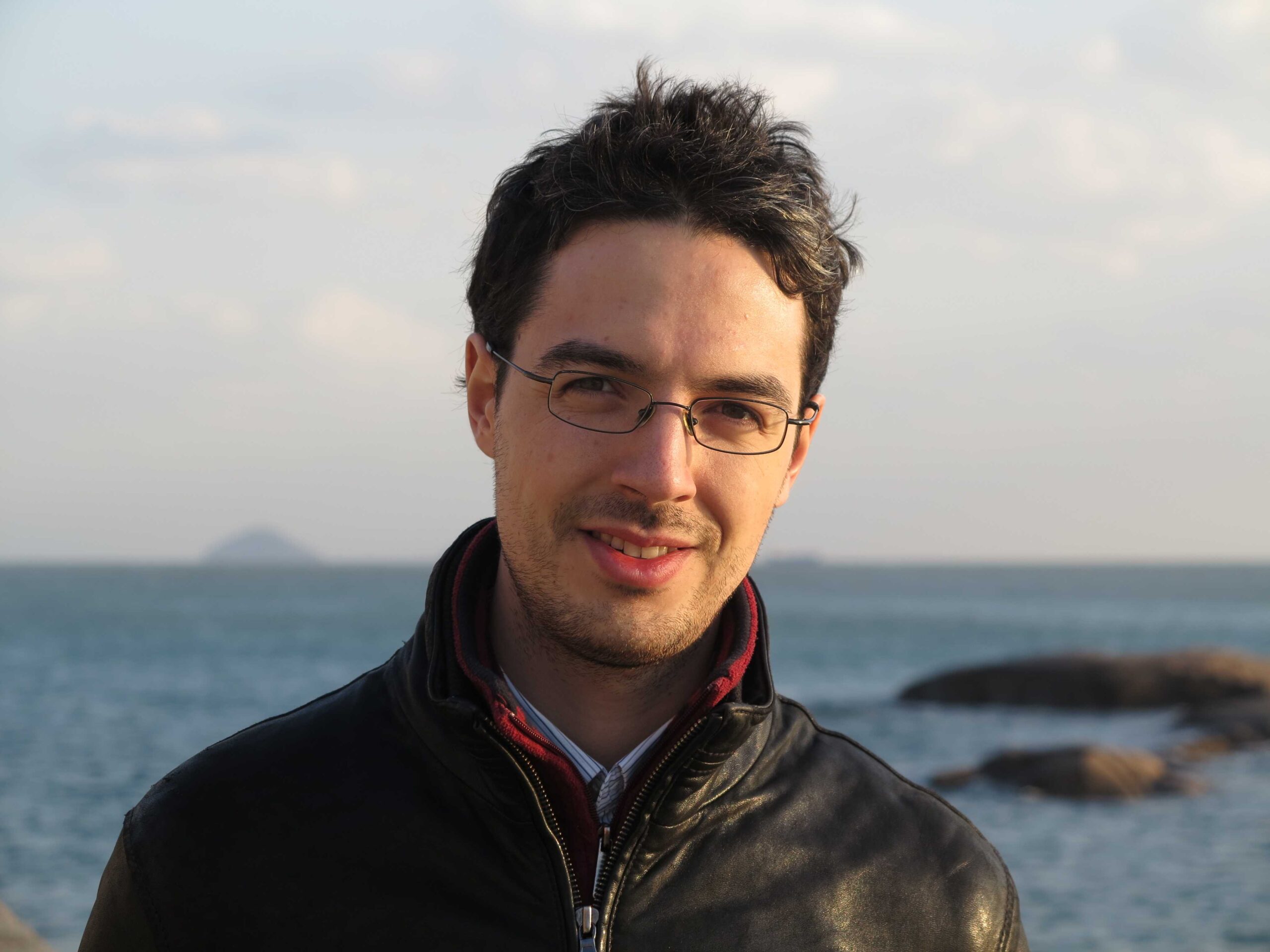
Gregory M. Green, Ph.D., has joined Westlake University’s Department of Astronomy as an assistant professor. He will lead the Milky Way Laboratory.
Dr. Green studied physics as an undergraduate at the University of Michigan (Ann Arbor), where he worked on cosmology.
He obtained his Ph.D. in Astronomy and Astrophysics from Harvard University in 2016, creating the first large-scale three-dimensional map of interstellar dust in the Milky Way.
Dr. Green then took up a Porat Postdoctoral Fellowship at the Kavli Institute for Particle Astrophysics and Cosmology at Stanford University. He was awarded a Sofja Kovalevskaja Prize by the Alexander von Humboldt Foundation in 2020 to found and lead a research group at the Max Planck Institute for Astronomy in Heidelberg, Germany.
Together with his collaborators, Dr. Green has made major contributions to the study of interstellar dust.
In the conversation below, Dr. Green explains the work of his research group, how he became interested in astronomy, and what drew him to Westlake University.
Q1. Please introduce your research group’s main research directions and their future prospects.
My research group studies the Milky Way, the galaxy that we live in. The galaxy is made up of stars, gas, dust and invisible dark matter. We focus on two areas.
First, we study the three-dimensional structure and properties of interstellar dust by observing how it scatters and absorbs the light of background stars. These maps of interstellar dust help us understand the dense clouds in which stars form. Because dust affects background light, our maps are also invaluable in correcting many types of astronomical observations.
Secondly, we study the distribution of dark matter throughout our galaxy by modeling its gravitational effect on the motions of stars. Variations in the density of dark matter may give clues about its nature, one of the major open questions in physics.
All of my group’s work involves large astronomical surveys of stellar spectra, positions and velocities. We are particularly interested in fusing machine-learning models with our knowledge of physics to analyze these datasets.
Q2. What first sparked your interest in astronomy research?
I have been fascinated by physics since I was a child, because it seeks to answer the most basic questions about how the universe works. As I studied physics in university, I came to realize that there are many important open questions in astrophysics that it may be possible to answer in my lifetime. What is the nature of dark matter and dark energy? How did the earliest galaxies form? What do other planetary systems look like, and do they have life? A few key developments have completely changed astronomy in the last few decades, including the advent of space telescopes, the invention of digital cameras, and the steady progress of Moore’s Law for computing power. The quantity and quality of astronomical data has exploded, and at the same time, ever more powerful computers allow us to analyze these vast quantities of data. This is what drew me to astrophysics. Finally, I would like to mention one book that particularly captured my interest in astronomy: “The First Three Minutes,” which I highly recommend to anyone interested in science.
Q3. What motivated you to join Westlake University, and what are your expectations for the future here?
I was impressed by the ambition and rapid progress of Westlake University in building up a world-class research center. I also had confidence in the experienced leadership and advisory panel of the astronomy department. Though the department was only founded last year, there is a very positive and motivated atmosphere here, and I believe we will be able to develop a world-class department. Despite the rapid technical progress in astronomy over the past decades, there are clouds hanging over the global environment for research, as some countries that once strongly supported science show signs of pulling back. However, I believe that Westlake University is embedded in a more stable research environment with a positive trajectory. Finally, Hangzhou is a beautiful city with a vibrant tech scene – an interesting mixture of the old and new.